A medical congress is a scientific meeting organized by an independent medical society or professional body, where researchers and clinicians present new data and discuss it with their peers. The society decides the program, chooses the faculty, and reviews the abstracts. Examples include the ASCO Annual Meeting in oncology, the ESC Congress in cardiology, and the ADA Scientific Sessions in diabetes. For pharmaceutical, biotech, and medical device companies, a congress is a meeting they attend and may support, but do not run.
Quick answer: The difference between a medical congress and a company meeting is who controls the content. At a society congress, the organizers choose the program, faculty, and materials, and a company that gives financial support sends it to the organizer, not to attendees. At a meeting the company hosts, such as a speaker program or an advisory board, the company sets the agenda and pays the speakers, so its own rules on content, fair market value, and attendees apply.
What happens at a medical congress
The scientific program is the center of a congress. It usually includes plenary sessions, oral abstract presentations, poster sessions, late-breaking trial results, guideline updates, and educational symposia. Many companies time the first public presentation of a Phase 3 result to a major congress, often alongside a journal publication.
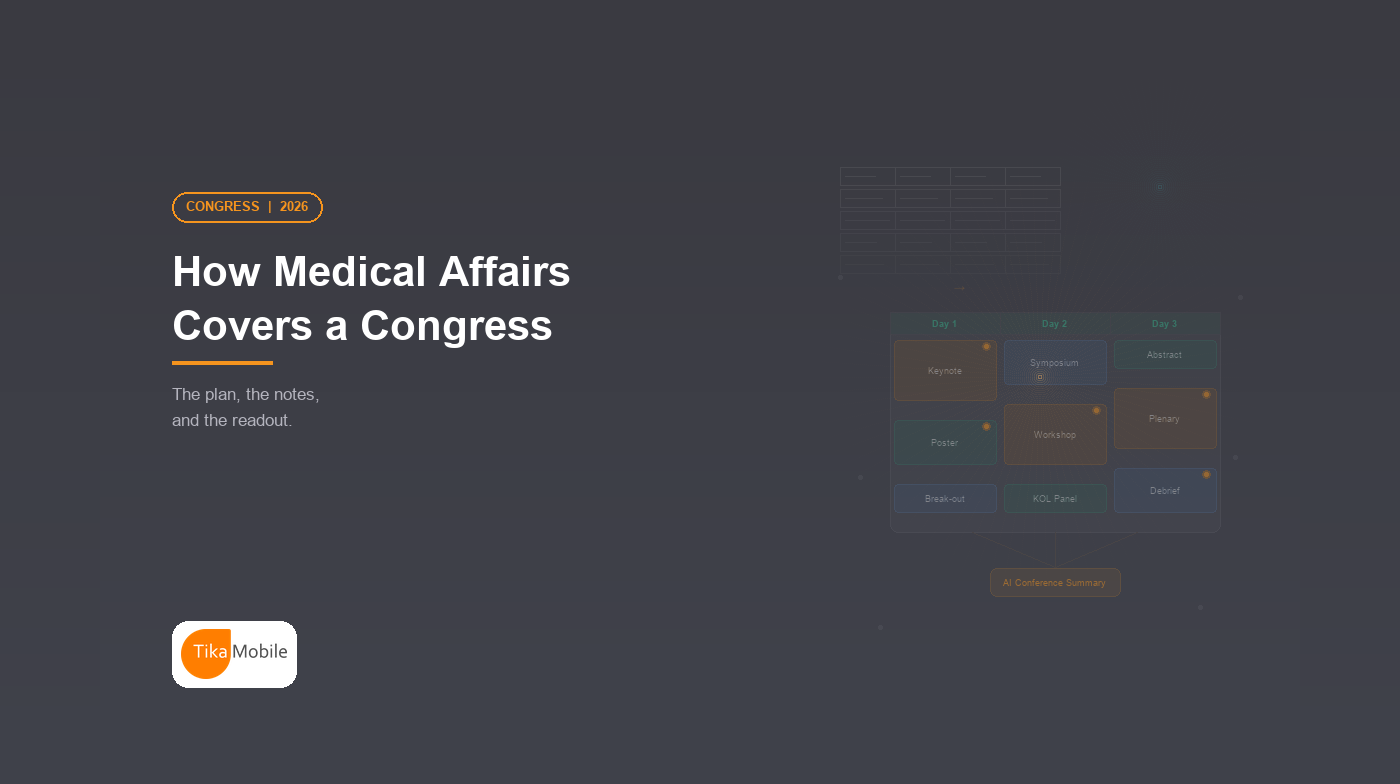
For medical affairs, that makes a congress one of the busiest weeks of the year. MSLs and medical directors attend sessions, meet experts for scientific exchange, and report what they heard about their own data and their competitors'. The work of planning that coverage, assigning sessions, and turning notes into a readout is covered in how medical affairs covers a congress.
Congress versus a meeting the company hosts
The PhRMA Code treats the two in separate sections, and the difference shapes what a company can do at each.
For third-party scientific conferences, the code says the meeting should be dedicated mainly to objective scientific and educational activity. A company may provide financial support, but it should go to the organizer, which can use it to reduce registration fees for everyone. When a company supports a meeting other than its own, control over the content, faculty, educational methods, materials, and venue stays with the organizers. Companies should not pay travel, lodging, or personal expenses for HCPs who attend without being faculty.
A meeting the company hosts is different. At a speaker program, the company chooses the speaker, provides approved content, and pays an honorarium at fair market value. At an advisory board, the company sets the questions and pays the advisors for their input. The company owns the agenda, so it owns the compliance record too: why the meeting was needed, who attended, what was presented, and what each HCP was paid.
The cases in between
Some company activity takes place at a congress without being part of the society's own program.
An industry satellite symposium is a session a company sponsors, usually in a slot the congress sells for that purpose, outside the main scientific program. The company typically chooses the speakers and the content, so it is often promotional and runs under the company's rules even though it appears in the congress schedule.
The exhibit hall is commercial space. A company booth is promotional, and many companies keep a separate medical information desk where HCPs can ask unsolicited questions and have them answered by medical staff.
The congress also brings experts to one place, so companies often hold their own advisory boards or investigator meetings nearby during the same week. Those are company meetings, with the company's contracts and payments, even if they happen in the congress hotel.
Why the distinction matters for medical affairs
The label decides which rules apply. A conversation an MSL has with an expert after a society session is scientific exchange. The same MSL presenting at a company-sponsored symposium is part of a company program. A congress readout that mixes the two makes it hard to show later which data were presented by independent faculty and which by the company.
It also shapes the systems a team uses. In TikaMobile's products, session coverage at a society congress is TikaConference, and the meetings a company runs itself, such as dinner programs, advisory boards, and grand rounds, are TikaSpeaker Bureau. What experts say at either can become a medical insight.
Frequently asked questions
What is a medical congress?
A medical congress is a scientific meeting organized by an independent medical society or professional body, where researchers and clinicians present new data, such as abstracts, posters, and late-breaking trial results, and discuss it with peers. The society controls the program and the faculty.
What is the difference between a medical congress and a company-sponsored meeting?
At a congress, the independent organizer controls the content, faculty, and materials, and company financial support goes to the organizer. At a company-sponsored meeting, such as a speaker program or advisory board, the company sets the agenda, chooses and pays the speakers, and is responsible for compliance.
What is a satellite symposium at a medical congress?
A satellite symposium is a session a company sponsors at a congress, outside the society's main scientific program. The company usually chooses the speakers and content, so the session runs under the company's own rules even though it appears in the congress schedule.
Can a pharma company pay for an HCP to attend a medical congress?
Under the PhRMA Code, companies should not pay travel, lodging, or personal expenses for HCPs who attend a third-party congress without being faculty. A company may give financial support to the organizer, which can use it to lower registration fees for all attendees.
If your team plans congress coverage in spreadsheets and email, we can walk through how session assignments and notes look on one record.
Book a 20-minute walkthrough →
Sources
- PhRMA. Code on Interactions with Health Care Professionals. Effective January 1, 2022. Sections 5 and 7.
Glossary
November 1, 2026