
What is an industry silo?
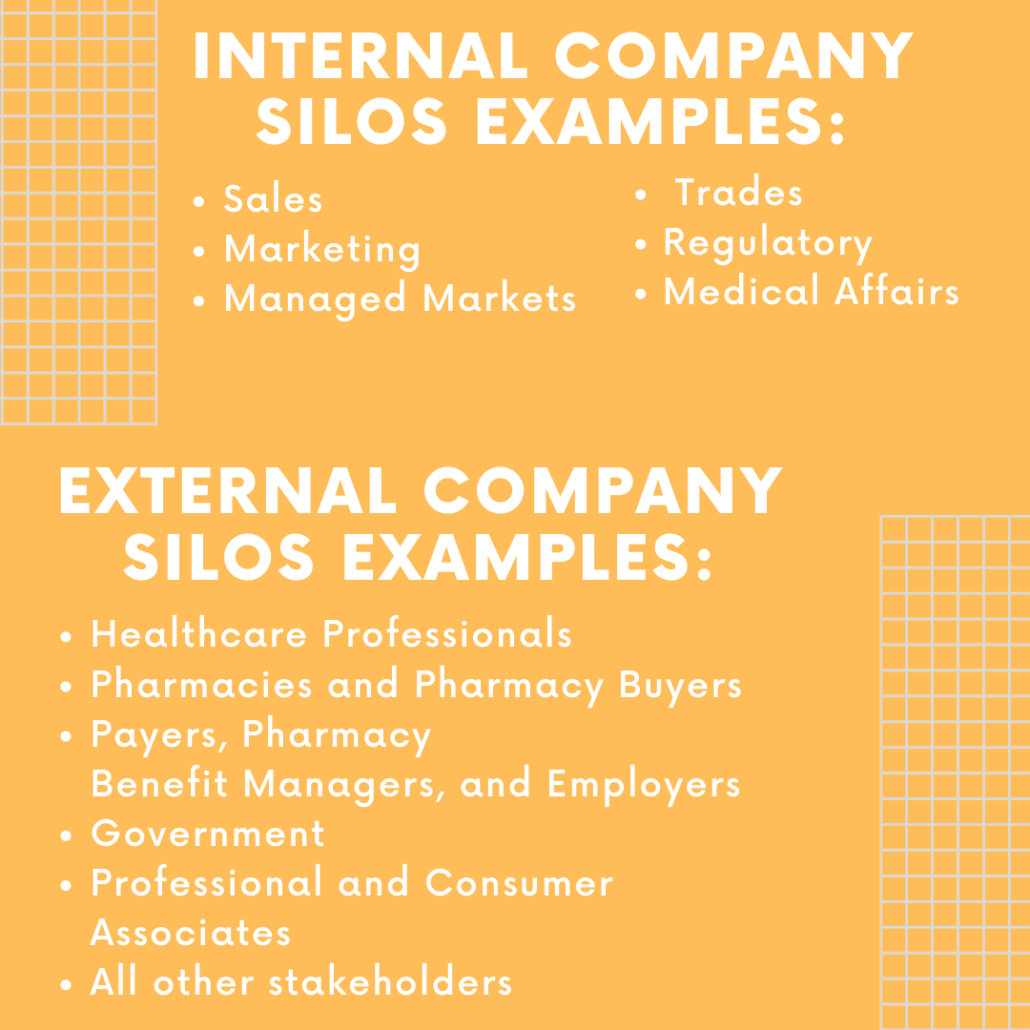
In the pharmaceutical industry, silos are described as functions of a business, both internal and external, that are separate and without integration. The silo mentality occurs when departments do not communicate their ideas, goals, tools or priorities with one another in order to achieve business goals. The company’s way of thinking is straight up and down, like a silo, causing implementations to be uncoordinated, duplicative and the opportunity for true end to end optimization becomes difficult.
Silo’s are common and can live internally and externally throughout the industry.
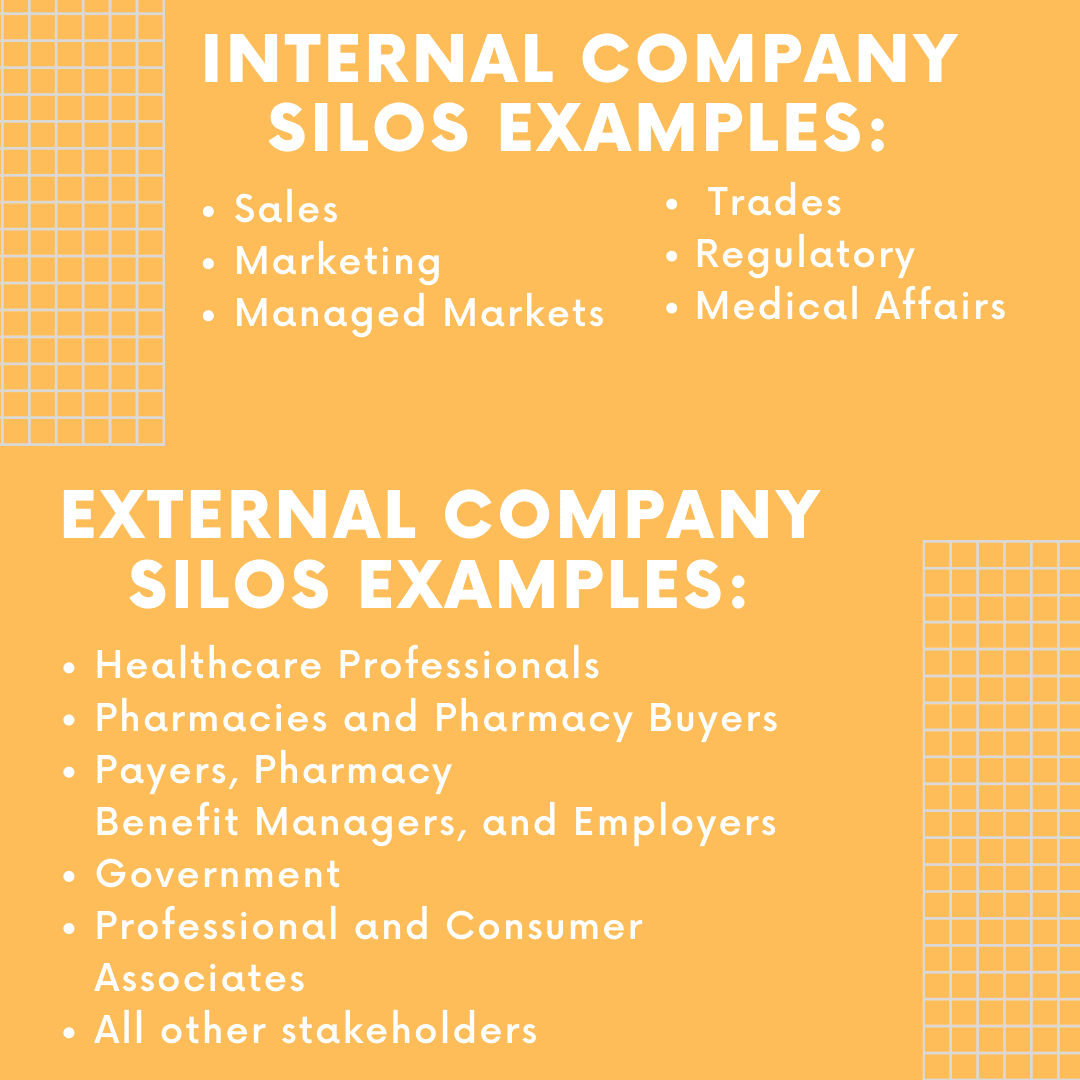
They form due to many reasons, but often because teams are hyper focused on achieving their goal within their budget, on their timeline, and lack the visibility and coordination skills to holistically optimize business processes across the organization. The scenario when Marketing purchases an asset management system that doesn’t integrate with the CRM that the Sales team uses to showcase approved marketing materials to clients, or the variation of HCP and Pharmacy lists that are independent and specific to each group interacting with it, are prime examples of silos affecting internal business.
By and large, when silos are present and disruptive inside an organization, they become visible to external business relationships and cause similar issues outside of the organization.
Breaking down silos
Eliminating silos within an organization provides companies the opportunity to capitalize on current investments and drive value across operations. In order to eliminate these silos, companies must begin by determining where the problem is occuring. The ability to analyze the interactions between internal and external functions to understand where the disconnect in communication occurs is a good first step to removing a silo. Ensuring that all key stakeholders of each silo are involved enables integrated approach and will provide a cross-functional way to transform into a productive organization.
Introducing...Multichannel
To really experience your multifaceted organization through and through, introduce the industry adaptation of multichannel. Multichannel shatters any idea of silos by immersing integration within an organization. In the pharmaceutical industry, the tradition of silos was severely misaligned, and the introduction of a multichannel approach has readjusted the industry both internally and externally.
Cross-functional approaches sparks proper collaboration and new phases within a company. Patrick Lencioni is quoted calling silos a “waste of resources, (that can) kill productivity, and jeopardize the achievement of goals.” Multichannel is the approach that creates synergized silos that work together and benefit each other mutually. They look at stakeholders and analyze the interactions of multiple channels and the way they produce outcomes when they are integrated. Due to the synergy of multiple channels instead of direct top-to-bottom approaches, multichannel is a more efficient implementation against silos in the pharmaceutical industry.
Eliminating the use of industry silos and integrating the use of multichannel seamlessly enhances overall productivity and communication in the workspace. Better company collaboration leads directly to better decision-making. A number of high-level and high-return benefits come from the introduction of multichannel.
With the help of advanced analytics and Customer Relationship Management, your company can shatter silos and be connected with one another. Contact TikaMobile Inc. or email us at info@tikamobile.com to see how we can help you and your colleagues with multichannel integration, through the use of our cloud-based computing applications.
Blog
January 24, 2020